
The Importance of Setting Clear Boundaries
Working from home offers numerous advantages, such as flexibility and comfort, but it also presents significant challenges, especially when it comes to balancing work and personal life. To ensure a productive and healthy environment, it is essential to establish clear boundaries between work and personal time.
The lack of definition for these barriers can result in emotional and physical burnout. When professional activities blend with personal life, it becomes easy to lose track of time and, consequently, productivity may decrease. Without limits, the temptation to respond to emails outside of working hours or carry tasks over into the rest of the day can generate a cycle of stress and exhaustion.
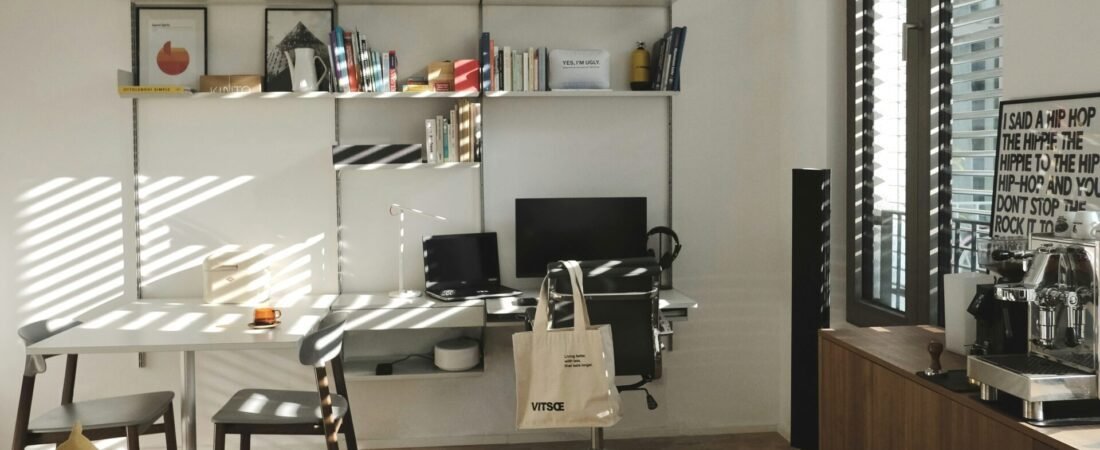
To avoid these pitfalls, an effective strategy is to define specific hours for work. Create a schedule that includes regular breaks and respect this time as if you were in a corporate environment. Additionally, setting up a separate physical space within your home for professional activities can help create a mentally distinct environment. This space should be reserved only for work, promoting concentration and disciplining the mindset related to professional duties.
Another tactic is to communicate your boundaries to family and friends so they can respect your work time. This not only helps minimize interruptions but also strengthens the separation between both worlds, allowing for a smoother transition between the home office and the personal sphere.
By applying these boundary-setting practices, it is possible to achieve an effective balance, facilitating not only productivity but also overall well-being.
Creating Effective Transition Routines
The balance between home office and personal life is a challenge, especially when the lines between the work environment and home become blurred. One solution is creating effective transition routines that help mark the beginning and end of professional activities. Implementing daily rituals means you can establish clear rules for when your workday starts and ends, contributing significantly to productivity and well-being.
An effective method for these transitions is the practice of physical activities. Dedicating a few minutes of your day to exercise can act as a signal to your brain that it is time to start or finish work. Furthermore, regular exercise increases energy, improves focus, and reduces stress. Simple examples include brisk walks, stretching, or high-intensity exercises.
Another valuable strategy is meditation or mindfulness practice. Set aside a few moments before starting work or at the end of the day to meditate. This practice not only helps with mental clarity but is also a great way to release tension accumulated during the day. Over time, these rituals can be internalized, allowing your mind to associate these moments with preparing for work or disconnecting from it.
Finally, it is important to personalize these routines according to your needs and preferences. Experiment with different rituals until you find the ones that adapt best to you. The goal is to facilitate the transition between home office and personal life without losing productivity, making daily life more harmonious and balanced.
Protecting Your Personal Time
In a world where the home office has become increasingly common, the ability to balance work and personal life without losing productivity is essential. One of the most critical aspects of this balance is protecting your personal time. This refers not only to the pleasure of not working but also to the importance of valuing every moment dedicated to yourself and your personal relationships.
To prevent professional demands from invading your personal life, it is fundamental to establish clear limits. Start by defining a fixed work schedule and communicate this decision to colleagues and superiors. Creating a separate physical space for work, if possible, can also help reinforce these boundaries. Thus, upon leaving that space, you can mentally distance yourself from professional responsibilities and focus on leisure and self-care activities that are fundamental to your mental and emotional health.
Additionally, it is advisable to schedule specific moments in your week dedicated to hobbies and relaxing activities. Whether it’s practicing a sport, reading, or meditating, these activities not only renew your energy but also help maintain motivation. Incorporating small daily rituals, such as regular breaks to disconnect from work, is also an effective strategy for recharging your batteries. Quality time dedicated to personal activities can significantly improve your productivity when you eventually return to work.
Lastly, one must recognize the value of time for oneself. By placing real value on your personal hours, you invest in your happiness and well-being. This approach is an essential step toward not only balancing home office and personal life but also ensuring you remain productive in your professional responsibilities.
Sustainable Balance: Maintenance and Adjustments
Maintaining a balance between home office and personal life without losing productivity requires an active and continuous approach. Adopting an initial set of practices is only the first step. It is fundamental to review and adjust your routines and boundaries from time to time, as both personal and professional circumstances can change significantly.
An effective way to do this is to establish regular reviews, which can be weekly or monthly. During these reviews, analyze how your practices are working and identify which areas may need adjustments. This way, you will be able to realize if you are adequately managing your workload and dedicating enough time to your personal activities.
Furthermore, consider using technological tools that can assist in this process. Time management apps, digital calendars, or productivity monitoring platforms are valuable resources that allow for a clearer view of how you are managing both work and personal life.
Another aspect to observe is communication with those around you. Sharing your goals and restrictions with family members or partners can foster an environment of mutual support. This communication not only defines clear boundaries but also promotes a healthier space for performing both professional and personal obligations.
Ultimately, the balance sought in the home office and personal life is not a fixed state. Like a dynamic dance, it requires attention and adaptation as circumstances change. Remember that persistence in adjusting your practices whenever necessary is fundamental to maintaining productivity without compromising your quality of life.